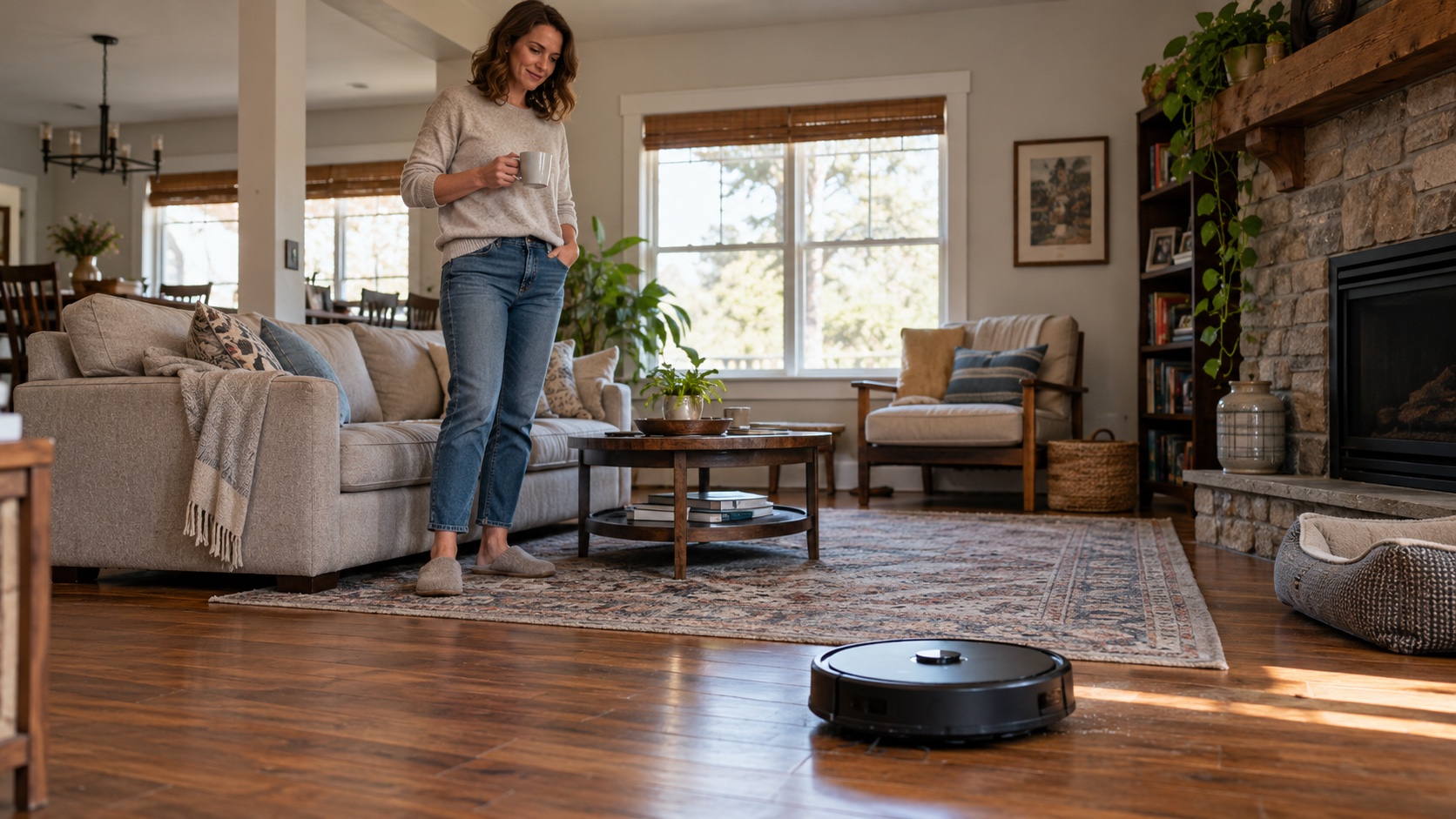
AI-generated conceptual illustration of a generic robot vacuum in a home; the device is not an exact depiction of a reviewed or tested model.
The useful comparison starts with your thresholds, rugs and maintenance routine. A large suction number cannot answer all of those questions.
A robot vacuum's product page can make cleaning look almost invisible: the machine leaves its dock, navigates an immaculate home and returns without interruption. A buying decision has to account for the less photogenic details, from a low sofa to the place where dirty water will be emptied.
As holiday offers arrive, compare the home and the ownership routine before comparing headline specifications. This is a research-based buying guide using manufacturer documentation, not a hands-on review or a ranking based on Taken Social testing.
Measure the route and the dock location
Start with the areas you want cleaned. Note door thresholds, loose rugs, furniture clearance, cords and the spaces in which a machine might need help. Measure the intended dock location, including room to approach it and access the parts an owner must remove. A dock that fits inside a niche may still be inconvenient to service there.
Roborock's current Saros 20 product documentation illustrates why exact figures and conditions matter. It lists a robot height of 79.8 millimeters and dock dimensions of 381 by 475 by 488 millimeters. Those figures describe that product, not a universal robot-vacuum footprint.
The same page's threshold-climbing claims depend on defined test conditions. A combined height figure for a particular multi-level threshold is not permission to assume a robot can climb a staircase or cross every doorway of that height. Match the manufacturer's stated conditions to the obstacle in your own home.
Read the maintenance story
Self-emptying, mop washing and automatic refill are different features. Determine which tasks the exact model performs and which remain yours. Before buying, find the instructions for brushes, filters, mop components, tanks and the dock. Check the price and availability of consumables as part of the overall ownership cost.
The Saros 20 support hub provides a route to the model's documentation. Use the support material for the actual version sold in your region. A water-tank model and a version designed for plumbing connections do not imply the same installation work.
Plan where maintenance will happen. Someone with limited room or difficulty lifting a tank may value accessible parts more than an extra automated feature. A household with pets should read obstacle-detection claims and exclusions closely and keep floors clear as directed; marketing language is not a promise that every mess will be recognized.
Put privacy beside performance
Connected cleaning adds another comparison: what data is collected, where it is processed and which functions depend on an account or cloud connection. Read the policy and controls for the model you are considering rather than applying a general claim about the whole category.
For example, iRobot's Imprint Smart Maps privacy explanation says those maps are cloud-stored and explains that disabling mapping features also disables associated app functions. That describes the documented iRobot system; it does not establish how another brand handles maps or images.
The useful shortlist is a set of models that fit your space, support your cleaning tasks and have maintenance you are prepared to do. Only then compare price, warranty, return conditions and independent tests of the exact model. A discount is easier to evaluate once you know which compromises you are accepting. Read more in Taken Social's Products & Reviews section.
Reporting and source information checked November 1, 2026.