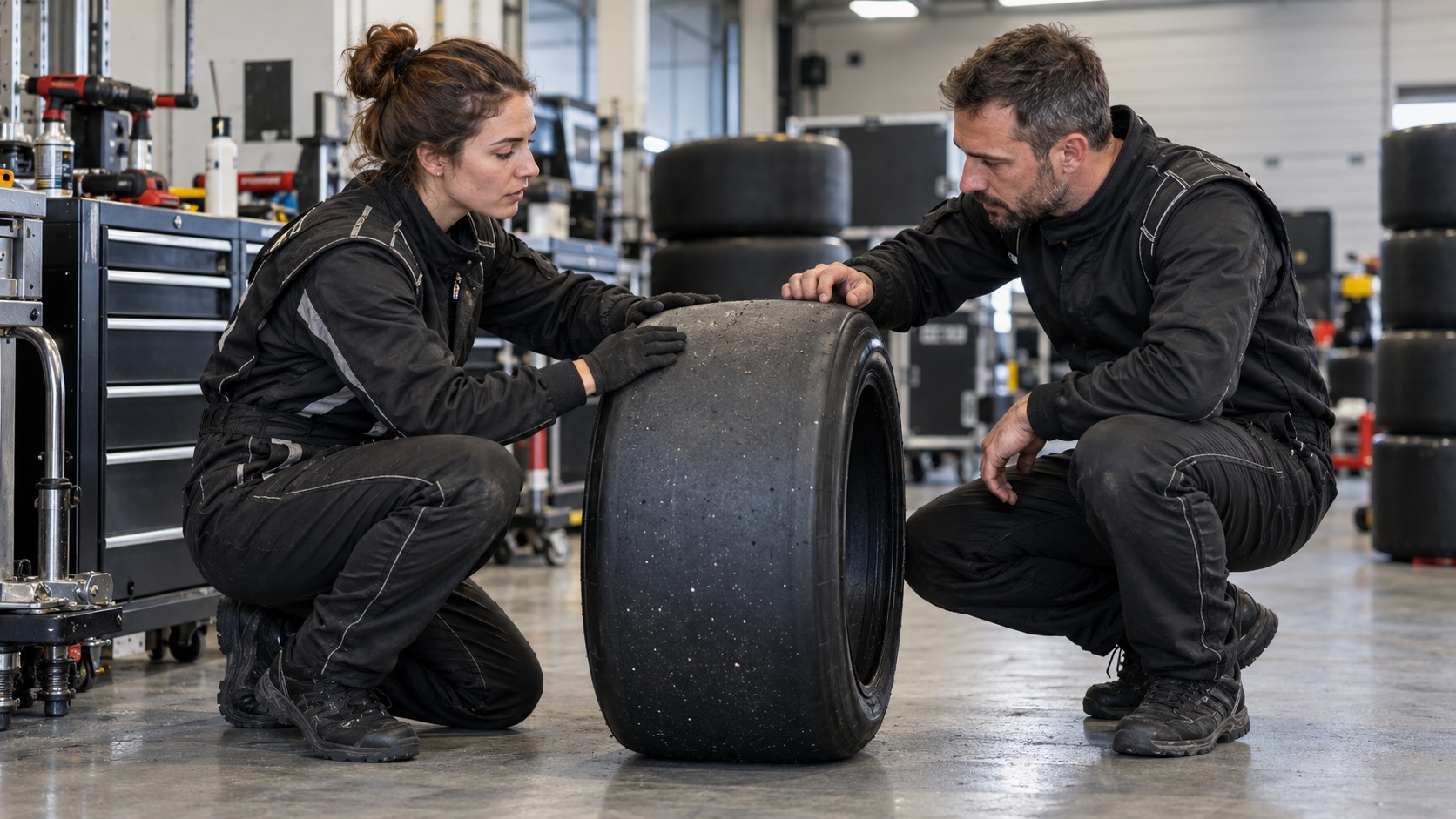
AI-generated editorial illustration of motorsport pit work; not a photograph of a Formula 1 team, its 2026 car or the Sao Paulo event.
Formula 1 heads to Interlagos on November 6–8. Start with the confirmed schedule, then watch how qualifying and race pace tell different stories.
Interlagos gives a Formula 1 weekend a recognizable rhythm: cars plunge into the Senna S, thread through the infield and climb back toward the line. For the 2026 São Paulo Grand Prix, the racing comes on November 6–8, with Sunday's Grand Prix scheduled for November 8.
The official Formula 1 event page lists the Autódromo José Carlos Pace at 4.309 kilometers, with a 71-lap race and a total distance of 305.879 kilometers. Those are the confirmed event facts. Predictions about weather, winners or incidents are separate and remain uncertain.
Check this year's format
As reviewed November 1, the event page lists two Friday practice sessions, a third practice session and qualifying on Saturday, and the race on Sunday. Do not assume the timetable matches a previous Brazilian weekend. A saved calendar from another season can send a viewer looking for the wrong session.
Use the event page's time-zone controls to confirm your local start times, especially for a watch party across several U.S. time zones. Check your regional broadcaster's listing as race week approaches. Session time, programme start and streaming access are different details; an official race time alone does not confirm every viewing option.
The 2026 championship calendar is the reference for the broader sequence of events. This preview does not assume a result from the Mexico City round taking place over the October 30–November 1 weekend.
Why qualifying is only the opening question
A qualifying lap shows what a driver and car can deliver over one attempt in those conditions. Sunday's race asks for a different combination: sustained pace, tire management, traffic decisions and pit-stop execution. That is why an impressive Saturday result is evidence of speed without being a guarantee of the finishing order.
When following practice, compare like with like where the available information allows it. A short run on a different tire or fuel load can create an eye-catching time without establishing who has the strongest race pace. Treat an isolated timing-screen position as a prompt for questions rather than a complete competitive ranking.
At Interlagos, Formula 1's circuit guide highlights the elevation changes and the linked infield section. Watch whether a car appears comfortable through a sequence of corners as well as how it performs on the straight. A lap is a set of compromises, not a single speed-trap number.
The 2026 rules add another viewing layer
Formula 1's 2026 rules explainer describes a new generation of cars with revised energy management and advanced sustainable fuels. The larger role of electrical energy makes deployment and recovery part of the competitive picture alongside the more familiar questions of tires and track position.
For a casual viewer, there is no need to memorize the entire technical rulebook. Listen for explanations tied to a particular lap or maneuver, and distinguish a confirmed technical constraint from a commentator's inference about a team's choices.
A useful weekend watchlist is short: qualifying order, sustained race pace and how strategy changes when cars encounter traffic. The outcome still has to be raced. Find more coverage in Taken Social's Sports section.
Reporting and source information checked November 1, 2026.