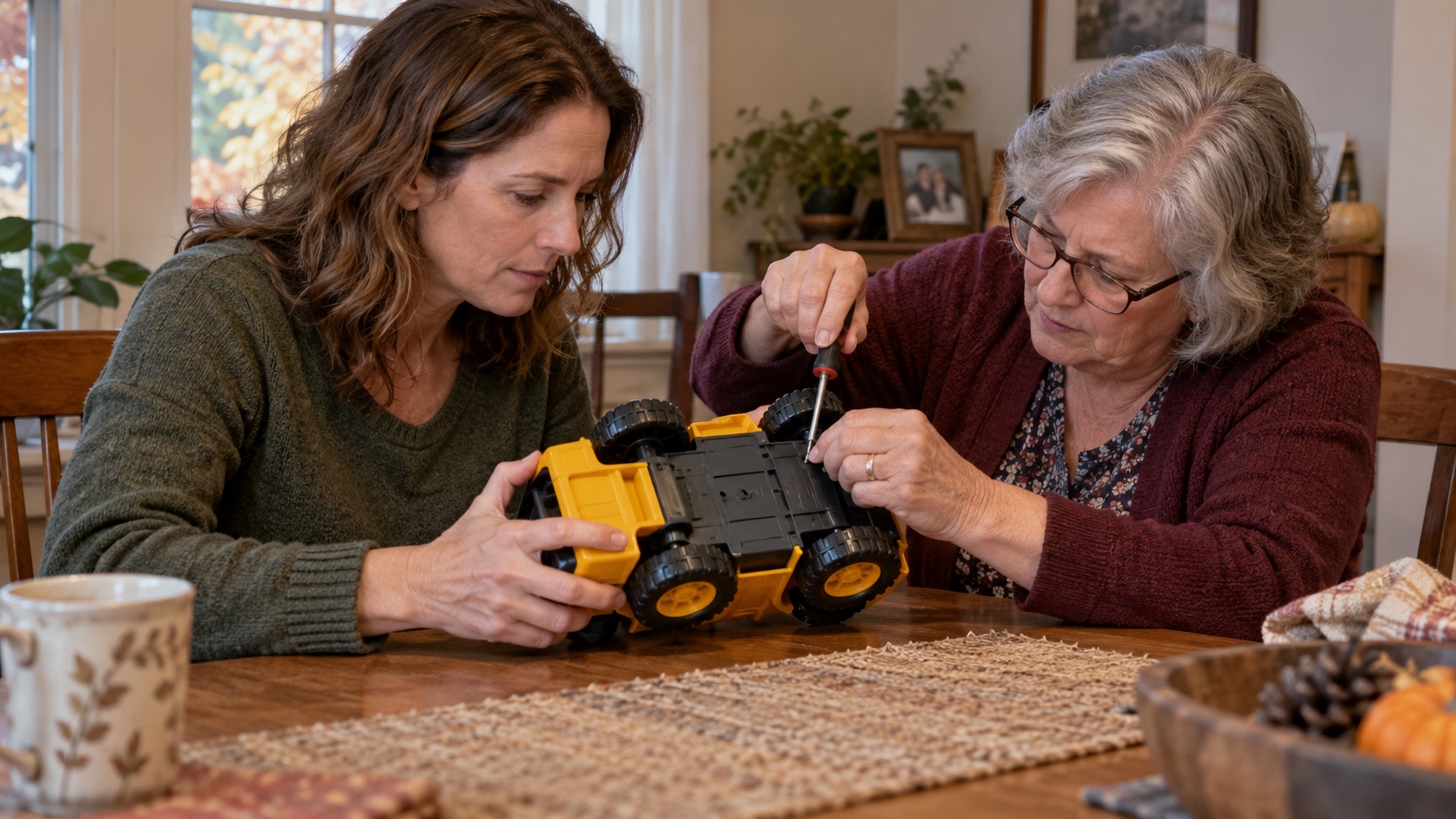
AI-generated editorial illustration of adults checking a toy; no actual product certification or safety inspection is represented.
A new water-bead standard took effect this year. It belongs alongside age labels and battery checks on a practical holiday shopping list.
A toy can look like a perfect gift in a shopping photo while leaving important questions unanswered. Who will be in the room when it is opened? Can a younger sibling reach its parts? Does an electronic feature rely on a battery compartment that stays closed?
Those questions are especially relevant for the 2026 holiday season. A new federal standard for water beads took effect in March, but a rule's existence does not turn every product or play setting into an appropriate choice for a young child.
What changed for water beads
The Consumer Product Safety Commission's March 12 announcement says water beads manufactured after that date must meet new performance, testing and labeling requirements. The standard addresses expansion size, acrylamide limits and warnings for covered products.
Water beads can expand after swallowing and cause serious injury. The agency advises removing them from areas where young children may be present, storing them securely and discarding a bead-filled toy if beads begin escaping. It also warns that some products not marketed as children's toys fall outside the rule's scope.
For a gift buyer, the practical question is therefore broader than whether a listing mentions a new standard. Think about the household in which the toy will be used. A product intended for an older child can still scatter into a space shared with a toddler. Ask the caregiver before choosing a sensory or craft product whose contents you do not recognize.
Check age guidance and battery access
The CPSC's toy-safety guidance emphasizes age-appropriate choices and small-part hazards. Read the manufacturer's age label before purchasing, then consider the abilities and habits of the child receiving it. An age recommendation is not simply a measure of how advanced a child seems.
Electronic gifts need another check. The agency's button-cell and coin-battery guidance says toy battery compartments must have a secure closure requiring a screwdriver, coin or tool to open. Inspect the closure and keep loose batteries away from children. A damaged compartment requires attention before the product is used again.
This applies to the surrounding room as well as the gift. A remote control or decorative item can contain an accessible battery even if the toy itself does not. If a child may have swallowed a button or coin battery, seek immediate medical attention; do not wait for symptoms.
Do a second check when the box opens
Online shopping and opening day are two separate opportunities to inspect a product. Keep packaging information long enough to identify the model, understand assembly and look up a problem. Check the CPSC recall database using the exact product details rather than relying only on the store listing or a general brand name.
Before play begins, an adult can handle assembly, remove packaging and confirm that all closures are secured. Let other caregivers know about parts or accessories that need separate storage. If the gift is going to another home, pass along the instructions and identifying information instead of discarding them at the wrapping table.
Thoughtful toy shopping includes enjoyment and the setting in which it will happen. The most useful check is the one completed before a preventable problem becomes part of the holiday. Read more in Taken Social's Family section.
Reporting and source information checked November 1, 2026.