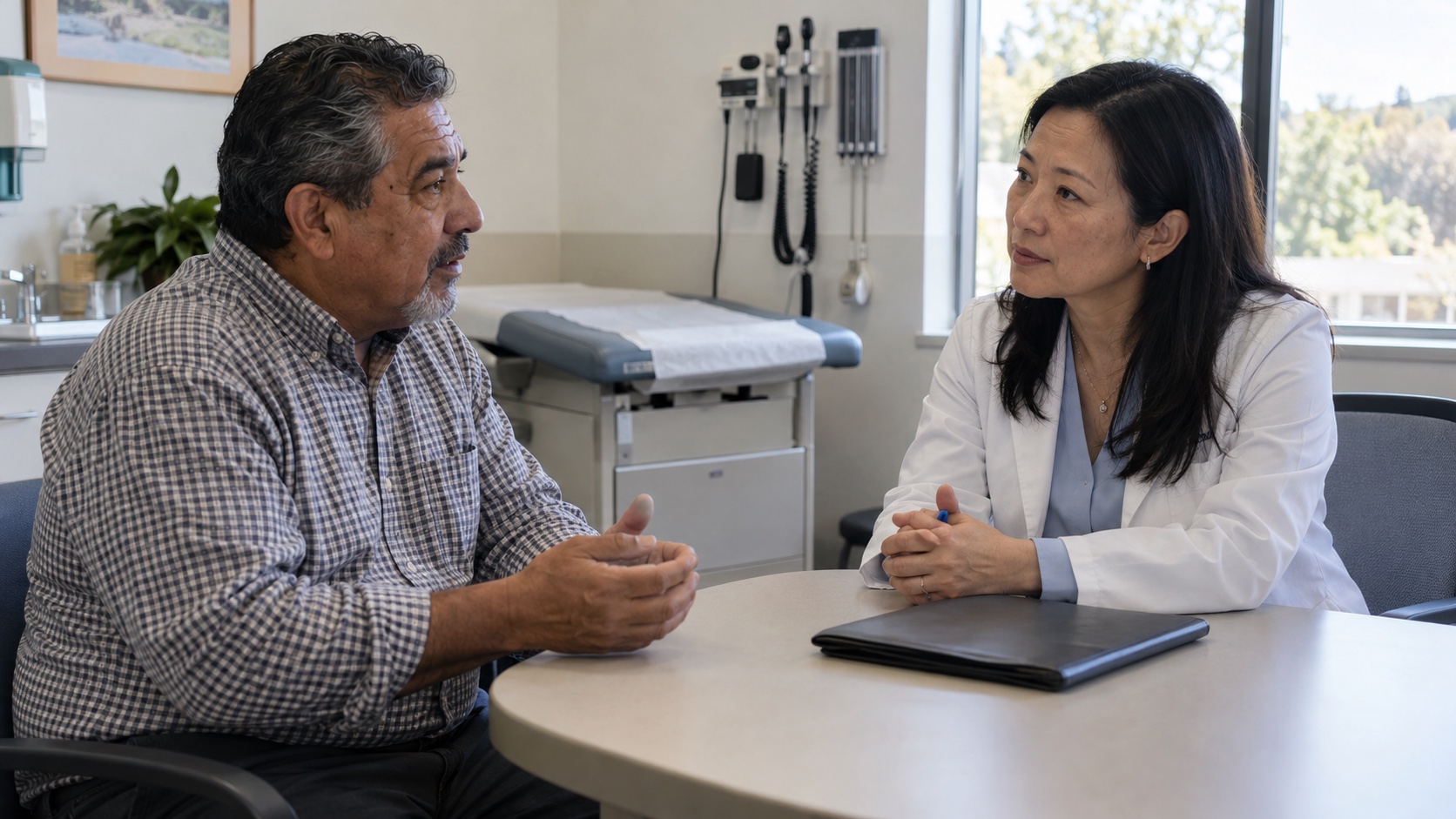
AI-generated editorial illustration of a pharmacist consultation; not a photograph of a real patient or a recommendation for a particular medical product.
Updated flu vaccines are part of the seasonal picture. Cleaner air, a plan for illness and timely medical advice also belong in the conversation.
November brings more indoor plans: family visits, school events and travel days that are difficult to rearrange. Preparing for respiratory illness is easier before a cough or fever forces a decision. A practical plan starts with current guidance and the needs of the people who will share the room.
The CDC's 2026–27 flu-season page, updated September 29, says all three components of this season's U.S. influenza vaccines were updated from the previous season. The agency has also posted interim clinical considerations for healthcare professionals. Vaccine choice, eligibility and timing should be discussed using that current information, particularly for someone with medical conditions or a complicated vaccination history.
Ask a specific vaccination question
“What do I need before this trip or gathering?” is more useful than asking whether every fall vaccine is the same. Bring your age, relevant health history, previous doses and travel date into the discussion with a clinician or pharmacist. Flu, COVID-19 and RSV have different products and eligibility considerations; a recommendation for one person may not apply to another.
The CDC's respiratory-illness overview describes immunization, hygiene, cleaner air and precautions when sick as complementary measures. No single step removes all risk. The point of preparation is to make sensible choices easier when people are busy, rather than promise an illness-free season.
For a gathering, consider ventilation and whether anyone attending is especially vulnerable to severe illness. Ask guests to share concerns privately if that makes planning easier. A host can offer flexibility about attendance without asking someone to disclose personal medical details to a group.
Decide what happens if someone gets sick
Current CDC guidance for the general public says to stay home and away from others when respiratory symptoms are not better explained by another cause. Returning to normal activities depends on both overall improvement and being fever-free without fever-reducing medicine for at least 24 hours. The agency advises added precautions for the following five days.
Those precautions can include cleaner air, a well-fitting mask, distancing or testing when around other people. Healthcare settings have separate guidance. Workplaces, schools and care facilities may also have specific requirements that should be checked rather than assumed.
Make the logistical part of the plan concrete. Know who can collect a child, whether a visit can move and whom to contact if a high-risk family member develops symptoms. A backup arrangement is easier to use when it has already been discussed.
Do not let a calendar delay medical advice
People at higher risk of severe illness should seek healthcare advice promptly when they become sick, since treatment options can depend on timing and the illness involved. Difficulty breathing or other severe or concerning symptoms warrant urgent medical attention. A general prevention article cannot determine which infection a person has or which treatment is appropriate.
Keep a list of current medicines and the contact information for your usual healthcare provider somewhere accessible. For travel, check how you would obtain care away from home before leaving. These are small preparations that reduce the work of making a decision while feeling unwell.
November's useful goal is a plan people can follow: informed vaccination decisions, attention to shared air and a clear response to illness. This is general health information, not a personal diagnosis or treatment plan. Find more reporting in Taken Social's Health section.
Reporting and source information checked November 1, 2026.